> For the complete documentation index, see [llms.txt](https://brightid.gitbook.io/brightid/llms.txt). Markdown versions of documentation pages are available by appending `.md` to page URLs; this page is available as [Markdown](https://brightid.gitbook.io/brightid/verifications/making-connections/connection-process.md).
# Connection process
### Making one-to-one connection
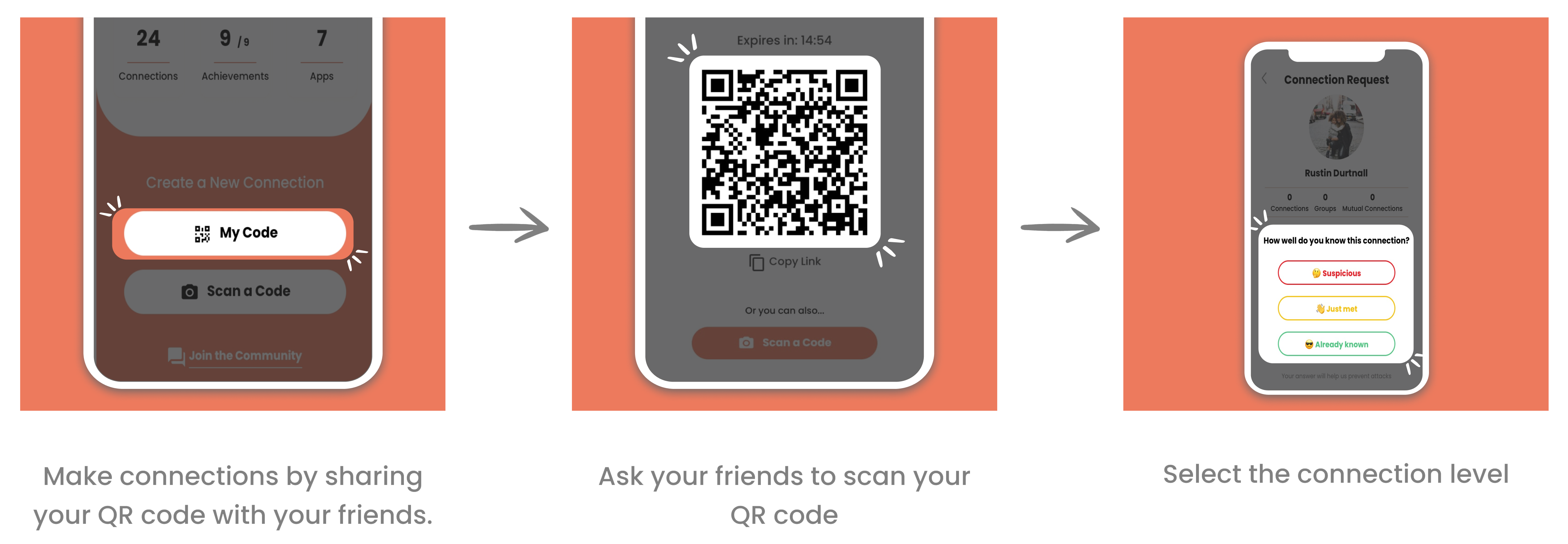
Use the buttons on the bottom of the home screen to start making connections. One person shows a QR code for the other one to scan. The corresponding profile data will then be exchanged through a secure p2p channel. They will then select the level of connections based on how much they know each other. It might be “already known”, “just met”, or “suspicious”. "Already known" being the desirable one for the verification protocols and security mechanism in BrightID. More on [connection levels](/brightid/verifications/making-connections/connection-levels.md) in the next section.
### Making group connections
If a close-knit group of people want to make connections at the same time, it is more convenient to make a group connection in which one person shows a QR code and everyone else scans it, so that everyone gets connected to each other.

To make a group connection, remember to change the “single-use” QR to a “group code” with the button on top. You will get notified each time someone scans the code. This code can be scanned by up to 30 people.
Connections can also be initiated as links using the “copy link” button. Each QR code or link is valid for 15 minutes.
What matters the most is selecting the right connection levels described in the next section.